Nils Braun · 11 September 2026
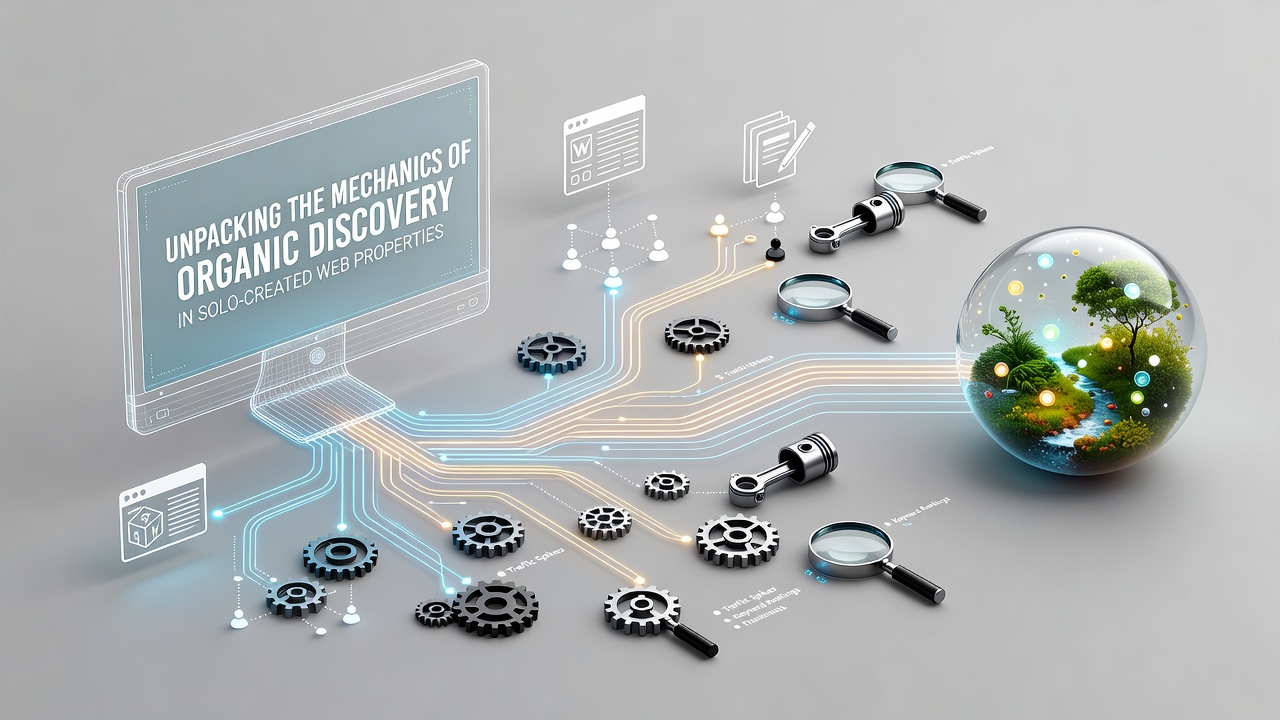
Unpacking the Mechanics of Organic Discovery in Solo-Created Web Properties
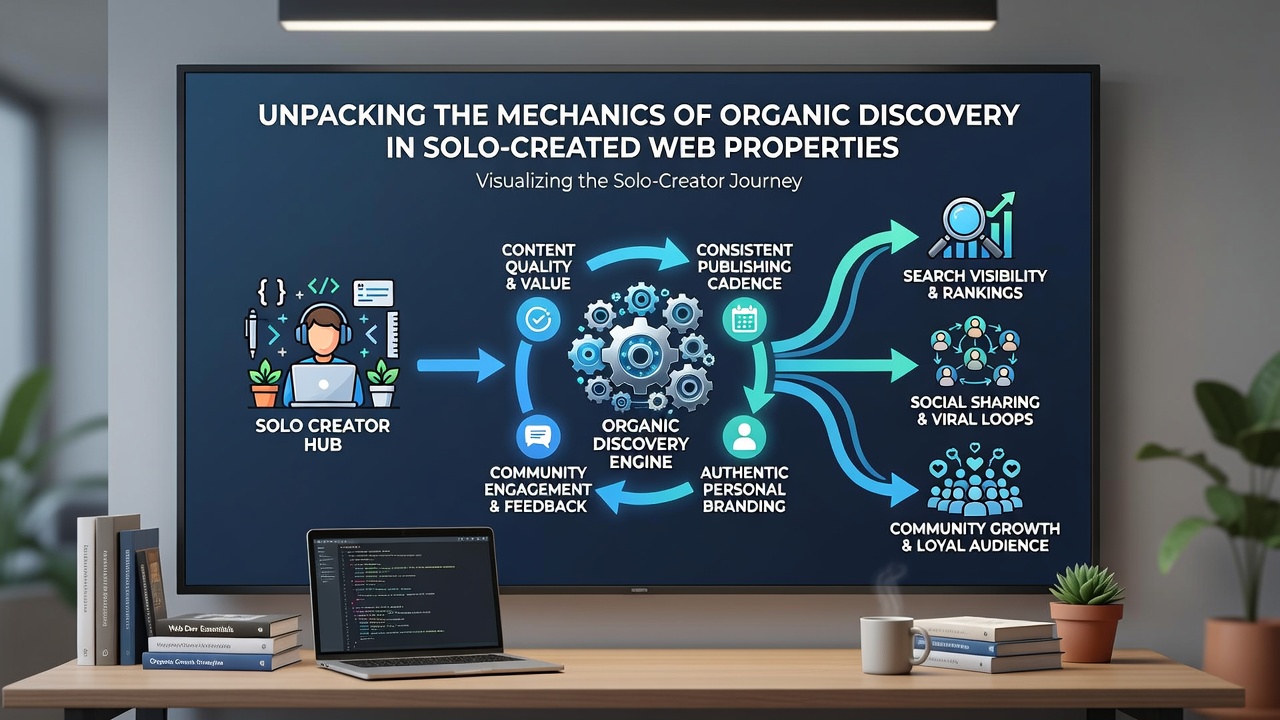
Organic discovery in solo-created web properties operates through interconnected systems where search engine algorithms, user behavior signals, and content distribution patterns determine visibility without paid promotion. Researchers at academic institutions have documented how these mechanisms favor sites built by individuals who maintain consistent publishing schedules and optimize for specific keyword clusters. Data from multiple studies indicate that solo operators achieve measurable reach when their properties align with evolving crawler priorities rather than relying on external amplification.
Core Components of Algorithmic Indexing
Search engines evaluate solo-created sites based on crawl frequency, content freshness, and structural integrity, with updates to these evaluation criteria occurring periodically. In September 2026, revised indexing protocols are expected to place greater emphasis on mobile-first rendering and core web vitals, according to announcements from technology standards organizations. Those who maintain sites notice that pages load quickly and display properly across devices receive preferential treatment in result rankings, while slower or poorly formatted content experiences reduced exposure. Experts observe that internal linking structures help crawlers map site architecture, allowing smaller properties to compete with larger domains when navigation remains logical and hierarchical.
User Engagement Metrics and Their Influence
Engagement data collected by analytics platforms reveals that dwell time, bounce rates, and return visit frequency serve as indirect ranking factors for independent sites. Solo creators who produce content addressing precise user queries often record higher retention figures, which in turn reinforce algorithmic confidence in the property. Studies from research universities across North America and Europe demonstrate that pages generating meaningful interactions accumulate authority signals over time, even without large backlink profiles. Observers note that social sharing from niche communities can accelerate initial discovery, although sustained performance depends more on search engine interpretation than transient referral traffic.
Content Architecture and Keyword Integration
Effective content architecture in solo projects incorporates long-tail phrases that match specific search intents, supported by data from industry reports issued by bodies such as the Australian Competition and Consumer Commission on digital marketplace dynamics. Writers who structure articles with clear headings, descriptive meta information, and relevant multimedia elements enable crawlers to categorize material accurately. Evidence suggests that topical clusters built around central themes strengthen site authority, enabling individual pages to rank for related queries without direct optimization for each term. This approach proves particularly useful for properties covering specialized subjects where competition remains moderate.
Link Acquisition Patterns in Independent Ecosystems
Backlink profiles for solo-created properties typically develop through editorial mentions, resource citations, and partnerships with complementary sites rather than large-scale outreach campaigns. Industry analyses from organizations in the Asia-Pacific region show that natural link growth correlates with consistent content quality and relevance to linking domains. Those monitoring independent web projects find that guest contributions on established platforms and participation in relevant forums generate initial connections, while duplicate or low-value links provide negligible benefit. Research indicates that anchor text diversity and contextual placement within referring pages contribute more substantially to ranking improvements than sheer volume of links.
Technical Foundations Supporting Discovery
Technical elements such as structured data markup, XML sitemaps, and robots.txt configurations facilitate efficient crawling of solo properties. Government digital guidelines from Canadian regulatory sources emphasize accessibility standards that simultaneously improve both user experience and search engine compatibility. Site owners who implement HTTPS protocols and eliminate duplicate content issues reduce barriers to indexing. Performance metrics tracked over extended periods reveal that properties adhering to these foundational practices maintain steadier traffic patterns compared with those that neglect basic optimizations.
Conclusion
The mechanics of organic discovery in solo-created web properties combine algorithmic evaluation, engagement signals, and technical execution into a cohesive system that rewards methodical development. Reports scheduled for release in September 2026 from various international bodies are anticipated to provide updated benchmarks on these interactions. Individuals operating independent sites achieve sustained visibility when they align content production and site maintenance with documented search engine requirements and user expectations. Continued observation of these patterns offers practical insights into how smaller properties maintain relevance within larger digital ecosystems.